




All You Need To Know About Perfumes - A Beginner's Guide
While the human sense of smell is by far the most powerful of the senses, it is probably the one we give the least amount of attention to in our day-to-day lives. This is a tragedy beyond measure, but one which doesn’t have to be so. The reason? Perfumes. And, if you’re new to the world of olfactory curation, you’re in luck: in this definitive guide, we’ll take you through everything you need to know about perfumes, including their constant presence through history, the nuance in their production and classification over the years, and why they are still so essential today. We’ll also show you some of the best perfume brands you can buy from in Singapore online on iShopChangi, so you’ll be the new expert in town next time you head to the checkout. So, let’s get started, shall we?
A quick history of perfumes
It’s a known fact that everyone likes to smell nice, because perfumes have been recorded as far back as 3,300 BC in the Indus Valley (present-day India). Disparate findings of perfume production have also been noted in Ancient China, Egypt and Cyprus. In Cyprus, archaeologists unearthed evidence of the world’s first perfume factory, containing stills, mixing bowls, funnels and bottles dating back to approx. 2500 BC. Meanwhile, the world’s first chemist, Tapputi, lived in approx. 1000 BC Mesopotamia (modern-day Iraq, Syria, Kuwait and Turkey). She was known for her distillation of flowers, oils and aromatics with calamus, a psychoactive plant which was common in the region at the time.
The next major breakthrough in perfumery took place in the 9th century, when the Arab polymath and chemist, Al-Kindi, wrote down over one hundred recipes for fragrant oils and aromatic waters, while also recording over a hundred perfume-making processes, such as by alembic distillation. His findings of distillation helped Persian chemist, Ibn Sina, refine the first rose water, which was more delicate than the previously-used mixture of oils and petals.
Between the 16th and 17th century, the global seat of perfume production moved from the Arab to the European world. Perfumers like Réne the Florentine created perfumes for Italian noblewoman Catherine de’ Medici, and one century later, Giovanni Paoli Feminis created his Aqua Admirabilis, which we today recognise as the first eau de cologne. Over this time, demand for perfumes was growing rapidly. As a result, the cultivation of flowers in France and Italy boomed, and to this day, France and Italy remain the home of a great number of perfumeries worldwide.
Today, perfume aromas are most commonly produced by distillation or maceration. Distillation procures a fragrance by heating an ingredient and collecting the scented steam by-product, typically in a flask, alembic or column. Distillation is often used on delicate ingredients, like flowers. Maceration, by contrast, occurs when an ingredient is submerged into a solvent or fluid, which then acquires the scent.
Perfume classification
Perfumes can be classified in a few different ways, namely by: the type of ingredients; the concentration of ingredients in the solvent; and the fragrance notes.

1. Type of ingredients
Perfumes use ingredients from a wide range of sources, including plant sources, animal sources and synthetic sources.
Plants are by far the most commonly used source of fragrance in perfumes. Flowers and blossoms constitute the largest subcategory of plant-based aromas. Of these, you’ll often find rose, jasmine, mimosa, geranium, ylang-ylang, citrus, clove and vanilla. Perfumers widely use the extracted scents of fruits, such as blackcurrant, mango, peach, strawberry, and juniper berry. You might detect leaves and twigs, such as those from species and genuses like lavender, patchouli, sage, rosemary, violet and citrus. Seeds such as tonka bean, coriander, cocoa, nutmeg, cardamom and anise are among the most popular.
Woodier, earthier fragrances are often cultivated using plant sources closer to the ground. Bark-based fragrances often include cinnamon, cascarilla and sassafras. Those with wood extracts usually feature sandalwood, rosewood, cedarwood, birch, juniper and pine. At the root, rhizome and bulbous level, you’ll probably find scents like iris, vetiver and ginger. Nuanced olfactory compositions might also feature lichens, such as oakmoss and treemoss, or resins, such as amber, frankincense, myrrh and Peruvian balsam. Sometimes, you may even find seaweed extract in your perfume!
Animal sources are sometimes used in perfume production, although with pressure from animal rights activists, many of these practices are slowly being phased out. Many of the remaining animal sources used in perfumery come from animals which are not harmed in the process of harvesting ingredients. These relatively non-invasive animal sources include honeycomb (from honeybees), hyraceum (from rock hyraxes) and ambergris (from the sperm whale).
Synthetic ingredients are often used as replacements for animal ingredients or in instances where it is more economically viable to obtain the ingredients in a lab. White musk, linalool and coumarin are good examples of this, which are artificially created to emulate musk deer and terpene fragrances respectively.
2. Ingredient concentration
Perfumes are classified by the percentage concentration of aromatic compounds in the solvent, which is usually water or ethanol. There are six major classifications, descending in concentration: parfum (contains 15-40% aromatic compounds), esprit de parfum (15-30% aromatic compounds), eau de parfum (EdP; 10-20%), eau de toilette (EdT; 5-15%), cologne (3-8%) and eau fraîche (≤3%).
Today, some of these technical terms have developed gendered connotations: for instance, some perfumers market ‘cologne’ to men and ‘perfume’ to women. Nevertheless, perfume classifications do still hold their terminological significance. If you’re looking for a delicate, lighter aroma to follow you around, opt for an EdP, EdT or cologne; if you want something slightly stronger, parfum or esprit de parfum is your best choice. You may need to experiment here, though, as definitions between companies vary: one perfumery might define EdP as stronger than EdT, while the other might claim the opposite. Look out for words like extrême, intense, or concentrée, which suggest stronger concentrations.
3. Fragrance notes and families
Fragrances are described in musical terms, by their notes. Top, or head notes, are detected instantaneously upon application. Middle, or heart notes, come next, just as the top notes are dissipating. Finally, base notes arrive, bringing solidity and depth to a perfume – sometimes up to 30 minutes after initial application.
Perfume classification by olfactive family is relatively intuitive. Modern categories include floral, fruity, citrus, green, aquatic (AKA oceanic), and gourmand. As their names suggest, floral perfumes contain flowers; fruity perfumes embody fruits; citrus perfumes have citrus fruits. Green fragrances feature herbal ingredients like cut grass or cucumber, while aquatic fragrances feature synthetic creations reminiscent of the ocean. Gourmand perfumes are sweet, with ingredients you might find in an after-dinner dessert.
Choosing the right fragrance for different occasions
Choosing the right fragrance depends on all of the factors we’ve discussed above, as well as the occasion that you’re attending.
Think about your perfume choice as a reflection of your personality. Perfumes made with floral aromas will associate you with flowers, which are delicate, pretty and naturally attractive. Perfumes made with aquatic fragrances will remind you of the ocean: big; powerful; perhaps a little mysterious. Likewise, fruity and citrus notes will probably come across as exciting and zesty, while gourmand scents will seem sweet and delicious. Green perfumes will connect you with themes of nature and the environment.
With this in mind, perfumes reflect the image you want to portray for different occasions. For instance, you might choose a floral or green perfume for work, since these aromas are not too overpowering for a general office setting. By contrast, at a business meeting, you might try a perfume which is more innovative and nuanced, such as one featuring woods, resins or beans. On a romantic date, consider fun, sexy, fragrances, like those with fruity, gourmand or oceanic notes – but always ensure you stay true to yourself!
So, what perfume brands are best for him & her?
Now you know the basics, you can shop various perfumes to your heart’s content. At iShopChangi, we’ve got perfumes suitable for every taste discernible, from some of the best fragrance brands in Singapore.
Perfume brands for him
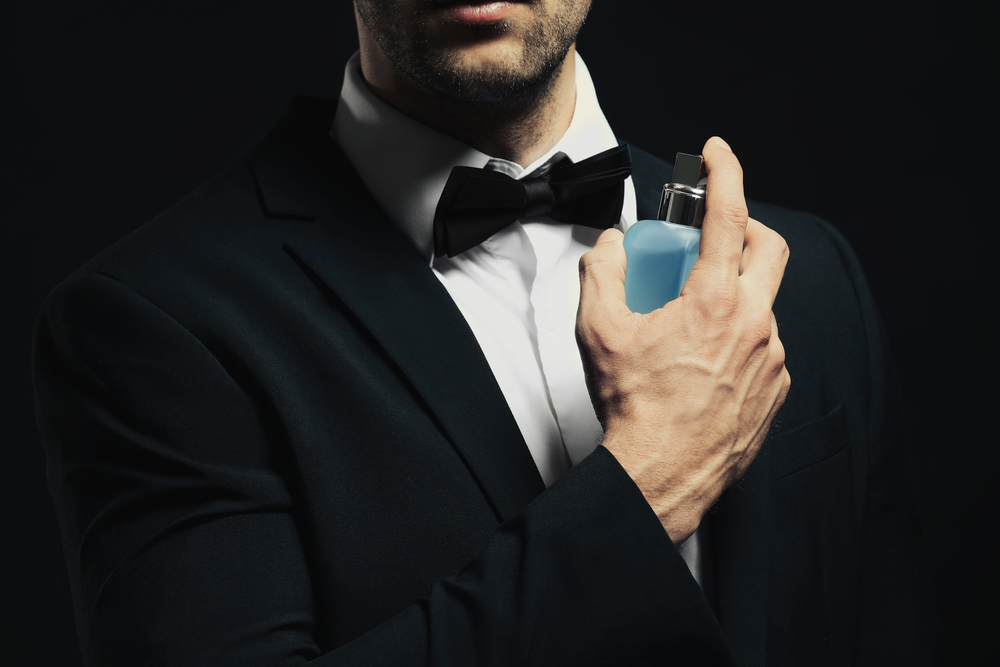
Issey Miyake’s L’Eau d’Issey Pour Homme EdT is a refreshing, delightful choice. Citrus, yuzu and mandarin zest meet nutmeg, cinnamon, saffron and geranium, with base notes including musk, tobacco and sandalwood. Complex yet light, this EdT is a smart go-to which is at once interesting and gentle. You’ll find bold, oceanic vibes in the Davidoff Cool Water Man EdT, which became the signature aquatic fragrance of the perfume world in the early 1980s. Think sea spray on the beach and brave boating expeditions across open waters. Versace, meanwhile, offers us the Dylan Blue Pour Homme EdT, one of their spiciest perfumes yet. Bergamot and grapefruit top notes collide sensationally black pepper, papyrus wood, incense, musk, tonka beans and saffron, all of which is served in a dazzling purple and gold bottle.
Those looking for an EdP will find joy in options like Giorgio Armani’s Acqua di Gio Profumo EdP, which couples the powerful scents of volcanic rock and ocean water with incense and bergamot. Spice fanatics, meanwhile, can’t look past Viktor & Rolf’s Spicebomb Extreme EdP. It greets you with a fiery explosion of grapefruit, pimento berries and black pepper, before enveloping you in the cosy, comfortable aromas of cinnamon, cumin, saffron, tobacco, vanilla and bourbon.
Perfume brands for her
The Lanvin Eclat D’Arpege EdP is a harmonious confluence of woody and floral fragrances. Sicilian lemon and green lilac start you off, before the dewey notes of wisteria blossom, peach blossom and red peony make their gracious entrance. Fundamentally delicate, this EdP is a great option for warm days in springtime. Chloé, meanwhile, emphasises the bouquet with their Classic EdP, a buzzing blend of rose, peony, freesia, magnolia and lily of the valley. Lychee, amber and cedarwood make tasteful appearances too, supporting the floral top and middle notes with style. Versace’s Bright Crystal EdP is a self-assured, sensual mix of chilled yuzu, pomegranate, peony, magnolia, lotus flower, musk and amber, providing a creative, balanced blend of calming, attractive notes from top to bottom.
Elizabeth Arden’s Green Tea Lavender EdT is a soothing fragrance reminiscent of a settling tea brew. Amalfi lemon, mandarin, chamomile and mint meet you on the top notes, followed by lavender, Caribbean magnolia, musk and ambrette. Salvatore Ferragamo, by contrast, offers a sweet and exciting EdT in their Incanto Charms, with passionfruit, honeysuckle, supported by base notes of rose, jasmine and musk.
Unisex perfume brands
Jo Malone’s Wood Sage & Sea Salt Cologne is a breezy, invigorating harmony of ambrette seeds, sea salt and sage. Revitalising and restorative, the cologne speaks to a seaside shack, where you can relax and replenish your energy with the divine power of the coast. Acqua di Parma’s Blu Mediterraneo Arancia di Capri EdT acknowledges the waterfront, too, in this instance speaking to the snug, cosy communities nestled on the Mediterranean foreshore. Cardamon, caramel, musk and Italian citrus merge into a sensual getaway, like the holiday you’ve been longing for. Diptyque’s Philosykos EdP, meanwhile, ventures even further into the sea, revealing the sun-soaked sweetness of an island fig tree. Fruity, green and woody, the EdP is a nostalgic ode to Greece.
Moving away from the aquatic, the Gardens of Tropic Neroli Cardamome EdP by Chopard presents a fresh, steamy collision of fruits and plants. Mandarin, neroli bigaradia and orange blossom intertwine into a harmonious, spritzy fragrance which straddles sweet and sensuous notes. Alternatively, try Gucci’s Mémoire d’une Odeur for a floral, spicy, woody array of chamomile, jasmine, musk, sandalwood and cedar, topped off with a sweet little hint of vanilla.
Why are perfumes essential?
Perfumes add an entirely new sense to your impression on others. Literally, a new human sense. In that sense (pardon the pun), they are an indispensable part of your next outfit.
Lucky for you, you can shop for your favourite perfumes online in Singapore today from iShopChangi, and fill your life with all the beautiful aromas you desire. Buy yourself duty-free perfumes from your favourite brands, including Chloe, Hugo Boss, Davidoff, Bvlgari, Issey Miyaki, Diptyque, Jo Malone and plenty more, or consider buying a bottle as a gift for a close friend or love interest.
Take S$59 or more of product to the checkout to have your perfumes delivered for free Singapore-wide, and while you’re at it, sign up to Changi Rewards to reap the benefits of even more amazing discounts at iShopChangi. Your olfactory journey is just beginning!
YOU MAY ALSO LIKE

