


Why Sake Will Be Your Next Drink of Choice
What is sake? Is it wine or liquor? How do you serve it, enjoy it, appreciate it, and where did it come from? In this ultimate alcohol guide that focuses specifically on sake, we’ll answer all of these questions and more about your next favourite drink: sake. Beginning with the history of sake production in Japan, we’ll cover the ins and outs of the taste, production techniques, and flavour classification of this delicious alcohol. Following that, we’ll explore some of the best sake brands you might like to try in Singapore today, with an overview of the wonderful catalogue available online on iShopChangi.
Where did sake come from?
Sake has its origin in Ancient China, where rice was first fermented. However, the majority of sake development took place in Japan, where rice fermentation techniques were established as far back as the 2nd century BC. Over the next thousand years, sake began to be instrumentally intertwined with the Japanese Imperial Court, giving it the status of royalty in the nation. In 715 AD, the first documented evidence of sake brewing using a mould (koji) took place, and in 927 AD, sake brewing techniques were recorded in an official code of practice.
The Middle Ages saw an exponential increase in sake brewing in Japan. From the 12th to the 14th century, sake production was the domain of religious institutions in Japan, being used primarily in ceremonies. From the 14th to the 16th century, this sphere of influence shifted to commercial sake brewers. Over 340 sake brewing businesses existed in Kyoto during this time, and the diversity of competition led to a number of innovations, such as pasteurisation in sake production. Within two hundred years, that number had increased to over 27,000 sake brewers. A technical book for sake producers was written, and brewers discovered the ideal type of water (miyamizu) for usage in their recipes.
Sake exports began in 1872, and bottling followed soon after. The National Research Institute of Brewing (NRIB) was established in 1904, tasked with proclaiming the Annual Japan Sake Award. During World War II, food shortages saw a decline in sake production, while in the 1990s, the government introduced a formal system of classifying sake by production techniques. It was at this same time that sake sales declined, however, in the 2000s, export markets opened up and sake consumption was up once again.
How do you make sake?

Sake is made using four primary ingredients: water, yeast, koji-kin, and, of course, rice. Production techniques vary from brewer to brewer, with each master brewer (tōji) often spending years perfecting a particular bottle. In what follows, we’ll cover the basics of the process, including: rice harvesting and polishing; koji introduction and fermentation; classification and bottling.
Rice harvesting and polishing
First, the rice is harvested. Rice is the central ingredient in sake, and as such, procuring the best-quality rice available makes a huge difference to the quality of the sake overall. Sake rice is not the same as regular table rice; the former is a particular strand of rice that has been bred for the ideal sake flavour. Next, the rice is polished and milled, which is the process by which its germ and bran layers are removed from the grain to leave only the starchy, white centre behind. Generally, the less milling that takes place, the stronger the overall aroma of the sake will be. Sake is often categorised by the percentage it is milled. For instance, a rice polishing ratio of 60% means that 40% of the outer rice grain is removed, and is classified as ginjo sake. On the other hand, a polishing ratio of 50% and below of the rice grain milled is called daiginjo. After the rice is polished, it is washed, soaked and cooked, before brewing begins.
Koji and fermentation
Brewing sake involves the use of koji, which is the mould that breaks down the starch in the rice to make sugar. Koji spores are placed into the rice mixture in a hot, steamy, humid room for two days, where the mould can flourish. Later, a specifically cultivated yeast is added to the mixture in a fermenting tank called a moto, to start converting the new sugars in the mixture into alcohol. The yeast used will generate a unique flavour profile in the sake, and master brewers spend a significant quantity of their time identifying just the right yeast for a particular sake bottle. There are three main styles of brewing that a master brewer can employ: kimoto, yamahai and sokujō. Kimoto is the traditional method of mashing the batch together with wooden paddles; yamahai skips this step; sokujō involves lactic acid, and is the most commonly used production technique today. Generally, kimoto and yamahai contain stronger, more intense flavours, while sokujō has a cleaner, lighter flavour.
Final classifications
Following fermentation, one of three sake varieties will remain: junmai, honjozo or futsu. Junmai is the highest quality sake, with no additional ingredients beyond the four primary ones mentioned earlier. Honjozo and Futsu both contain some distilled alcohol, with Futsu containing the most and embodying the majority of market sales of the beverage. Futsu is also likely to contain other additives, flavour enhancers and sugars. The liquid is separated from the solid part of the mixture, either through an automated pressing machine called an assakuki, or, for higher-quality brews, naturally, through a canvas bag. The sake is pasteurised, stored for approximately 3-6 months, and finally, it is put in a bottle for your consumption and enjoyment!
Is sake a wine or liquor? What kind of alcohol is sake?
Sake is a type of wine: specifically, rice wine. While it has the appearance of a liquor, the alcohol is made using the same techniques as grape-based wine: namely, fermentation.
Getting started with sake

If you’re new to sake, it would be best to try a range of different brands, to see which you like best. We would recommend kickstarting your sake journey with a bottle of Dassai Junmai Daiginjo 45. Peaches, strawberries, jasmine, ginger and orange blossoms come together in this accessible, fruity and delicious sake from one of Japan’s most trusted brands. Another daiginjo you might like to try comes from Saito Sake, in their Junmai Daiginjo. Smooth, and with primary notes of pear coming to the fore, this supple sake is another great option for beginners.
Cheaper options include the Kiku-Masamune Junmai Taru Sake, which features a dry, mature flavour straight from the barrel. Perfectly paired with spicy dishes, this sake is widely accessible and is a great choice for a nice evening meal with family and friends. From the same brand comes the Koujyo Shiboritate Junmai Sake, which accentuates peach and pineapple notes. Direct from the Hyogo prefecture, this bottle has been brewed with some of Japan’s finest natural elements, and will bring you a sound flavour quality. Some cheaper, bundled options that are available to you include the bundle of 4 Ozeki Hana Sparkling Sake, including peach, yuzu, mixed berry and classic, which will help you to identify the pairing flavours you admire the most.
Premium options include the Dassai Junmai Daiginjo 23, which contains some of the highest quantities of rice polishing you will find on the market. Apple, peach and pear only serve to enhance this already-brilliant sake, which is refined, exquisite and utterly beautiful to consume. Top-of-the-range picks like the Sake Hundred Shirin are practically unmatched, and feature rice refined to just 18% of the original grain size. Woody, smokey and oaky, the bottle is bold and brilliant, and suits a seasoned sake palette above all.
Can I buy sake as a gift?
Sake makes a fantastic gift that you can buy for friends, family and loved ones. Buy a bundle of 6 Saito sake bottles, which comes with two saito junmai, two saito junmai daiginjo and two saito yuzu bottles. The collection also comes with a free ceramic set, which your gift recipient can use to pour and drink sake in the traditional style dating back for thousands of years. Tanaka Shuzo’s award winning bottle of Junmai Daiginjo, which claimed the 2020 Kura Master Gold class winner and 2021 Bordeaux Sake Challenge Silver, is an exquisite pick which you can trust will deliver a sensational tasting experience. Alternatively, go all out on one of the most prized sake bottles you will find in Singapore: the Daishichi Myoka Rangyoku Grande Cuvee. This limited edition creation features only 1000 bottles, produced every three years, and blends some of the best batches of sake dating back to 1988 into one divine drink.
Sake flavour, serving and appreciation
Sake is known for its clean flavour profile, which combines elements of sweetness and savouriness. The beverage has a delicate, nutty and fruity aroma, although, that being said, there is enough diversity in sake production for there to be many exceptions to this rule. Much like wine, sake is classified by region, age, and production techniques, each of which go a long way to creating the flavour profile of each bottle.
Sake is ideally paired with other Japanese foods, just like how it has been done for centuries in Japan. Preparing Japanese food and consuming it with sake will connect you to a timeless tradition, and will make your sake drinking occasion all the more special. However, you can absolutely try to experiment with a few home-cooked recipes of your own, to see how sake tastes with each! Usually, sake with sushi, ramen and tempura always goes down well, as do fish, rice and curry dishes more broadly.
How to enjoy sake
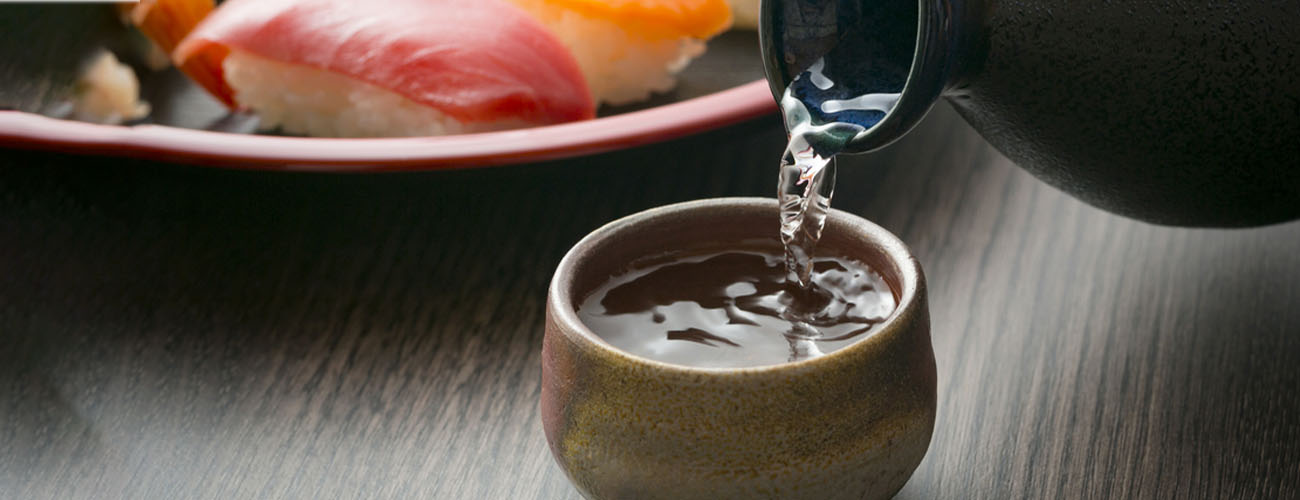
Sake can be served hot or cold, depending on your unique flavour preference. Like wine, it is best sipped and appreciated slowly alongside a meal, rather than consumed quickly like a shot. In Japanese culture, it is customary to not serve yourself sake, but to serve somebody else, who can then serve you in turn. You can cheers each other in the Japanese language, too, by saying “kanpai”. Since sake can be dry, sweet, bold, clean or flavoured, these combinations together lend themselves to a huge quantity of unique styles. To enjoy sake as best you can, we would recommend experimenting widely to see which tickles your taste buds most.
What kind of glass do you serve sake in?
Like other wines, sake is best served in a wine glass, as it allows the flavour to properly filter out and aerate. Keep in mind that warm or hot sake may be uncomfortable to consume in a wine glass, as its heat may be difficult to hold. If you are drinking hot sake, you can serve it in a ceramic cup, which will be far more insulated and easy to hold.
Does sake need to be refrigerated after opening?
Yes. Opened bottles of sake should be refrigerated after you open them, to preserve the flavour inside and to ensure it does not spoil. Once you have opened a bottle of sake, it should ideally be consumed within 2-3 weeks.
Buy sake in Singapore
Looking for sake in Singapore? You’ve come to the right place. Shop online here on iShopChangi today to find the best duty-free prices for sake on the island, from brands such as Dassai, Saito and Ozeki. Spend more than $59 at the checkout to receive free delivery of your sake Singapore-wide. To save even more at iShopChangi, sign up to Changi Rewards, and reap the benefits of even more exclusive deals for our most loyal customers. Alternatively, explore even more duty-free alcohol in Singapore by checking out the range of wine, spirits and liqueurs available on our website. Start shopping today!
YOU MAY ALSO LIKE