



The Ultimate Guide To Appreciating Wine & Spirits
Wine and spirits are all around us. Whether you’re out to dinner, visiting a local bar or going out for a family gathering, wine and spirits occupy a central place in the way we hang out, socialise, and celebrate significant events. However, most people know very little about the fine details of wine and spirits, including where they come from, how they’re made and how to appreciate them.
In this definitive guide, we’ll take you through just that, helping you become the expert in the room the next time you’re having a tipple with your pals. We’ll also show you the best wine and spirits brands to buy in Singapore, giving you an in-depth look at the alcohol scene before you head to the checkout. So let’s get started!
Understanding wine
Wine has a long history dating back several thousands of years. Wine, affectionately known as vino, was first made approximately 8,000 years ago, by grape planters, pickers and fermenters in present-day Georgia, Armenia and Iran. Within a few thousand years, wine had spread through the Balkans, Eastern Europe, Egypt, India and China. As a result, production techniques dramatically increased in sophistication. People loved the beverage and its intoxicating effects, so much so that the Ancient Greeks and Romans dedicated a god – Dionysus and Bacchus, respectively – to its worship.
Through the Middle Ages, wine found a home in churches and monasteries, where it was produced by clergy. It was from this religious vantagepoint that countries like Italy, France and Spain became the dominant forces of the wine world. With the onset of the colonial period that followed, wine spread across the globe, to countries such as Argentina, Australia, New Zealand, South Africa and the United States. Today, wine has earned a reputation for sophistication and fine-dining, with each country offering its own nuances based on climate, soil types and production techniques.
What should I look for in appreciating wine?
Want to become a true wine connoisseur? Wine is classified by the type of grape, the place in which it was produced, the brand and the year of production, and each of these factors communicate a huge amount about the bottle you’re buying. For instance, Frescobaldi’s Chianti Classico Faunae and Cockburn’s Special Reserve Port are both red wines (made with red wine grapes), but the first is an Italian chianti made in 2018, and the second is a Portuguese port developed over several vintages (years). As a result, the taste between these two reds will be hugely different.
In warmer climates, grapes ripen quickly, leaving them with a lot of sugar and not much acidity. As a result, warm climates often produce ripe, jammy wines, while cool climates, where the grapes ripen slowly, produce tart, crisp flavours. Wines can be made with red grapes or white grapes. Red grapes, like pinot noir and montepulciano, often produce rich, velvety flavours, while white wines, like riesling and pinot gris, usually generate zesty, fruity flavours. Wines are also distinguished by their strength, which is a product of its alcohol content. Light-bodied wines, like sauvignon blanc and pinot noir, contain a low alcohol content, while full-bodied wines, like chardonnay and shiraz, produce high alcohol content. Combining all of these factors – grape, location, flavour profile and strength – leaves just the brand and the vintage, which in themselves vary based on history, reputation and speciality. So the next time you see a Yalumba Y Series 2018 Shiraz from South Australia, you’ll know that you’re likely to get a full-bodied red wine with big, bold, warm flavours from a modern production location.
Shop red wine, white wine and sparkling wine in Singapore
Kickstart your red wine journey with a bottle of Donnafugata Sherazade Nero D’Avola 2019, directly out of Sicily’s warm, luscious country climates. Take note of red plum, cherry and balsamic notes as you drink, and enjoy it with your favourite Italian dishes like tomato-based pastas and pizzas. Head on down to South Australia’s Barossa Valley with a bottle of Wolf Blass Lyndoch Shiraz 2016, and match the wine’s bold, aromatic notes with a peppery steak and fresh garden salad. Alternatively, buy a cabernet sauvignon, like the Vasse Felix Filius Cabernet Sauvignon 2019 from Margaret River, Western Australia, and appreciate the deep red colour and flavour of this medium-bodied beauty.
Try your luck in the white wine department with an Orin Swift Mannequin (Chardonnay) 2018 from California’s Napa Valley. Lemon, butterscotch, honeysuckle and jasmine combine into a delightful, fresh and zesty taste profile, which is best served with fruit platters, fish or salad. Introduce your palette to white wines from New Zealand by trying a Greywacke Wild Sauvignon 2019, replete with tasteful notes of citrus peel, honeysuckle, shortbread and brioche. At once delicate and smoky, the bottle is a great choice for people who enjoy balance in their beverages. Enjoy a Moscato for something sweeter, like a Pio Cesare Moscato d’Asti. Sweet fruits and honey mix together in an intoxicating, heart-warming white which you’ll be sure to buy again in no time.
Sparkling wine fanatics might like to take a look at a Vietti Moscato d’Asti Cascinetta DOCG 2020, providing a direct contrast of white wines with sparkling wines from Italy’s Asti region. Peaches, rose petals and ginger dance exquisitely together in this bubbly, giving it a joyous, giddy, effervescent quality to die for. Alternatively, shop sparkling rose with a Bottega Il Vino Dell’Amore Petalo Pink Manzoni Moscato Rose, enjoy fruity, floral flavours like raspberry and rose as they interact with spices like sage, thyme and marjoram.
Getting started with spirits
Spirits, or liquor, have been documented on earth as far back as 7000 BC in China, with the presence of baijiu – a distilled fermented sorghum. By the 1st century AD, spirit production via distillation had been documented in Egypt, India, Pakistan and China, with local ingredients giving each beverage a distinct taste. A couple of hundred years later, Aztec Indians made the first tequila. Over the next thousand years, distillation techniques dramatically increased in sophistication during the Islamic Golden Age, leading to a better ability to isolate specific flavours in alcohol. By 1000 AD, gin houses had sprung up in France, Flanders and the Netherlands, and by the 1400s, vodka production in Russia and Eastern Europe was well under way.
From the 1700s onward, spirits took off in Western Europe, with brandy, rum, whisky and scotch production taking off in countries like Scotland, Ireland and France. These alcohol types were so popular that they were often used as currency between merchants, pirates and sailors during the colonial period. Today, spirits are widely consumed in bars, pubs, and family homes, with different products varying widely by taste, ingredients and strength.
What’s the difference between wine and spirits?
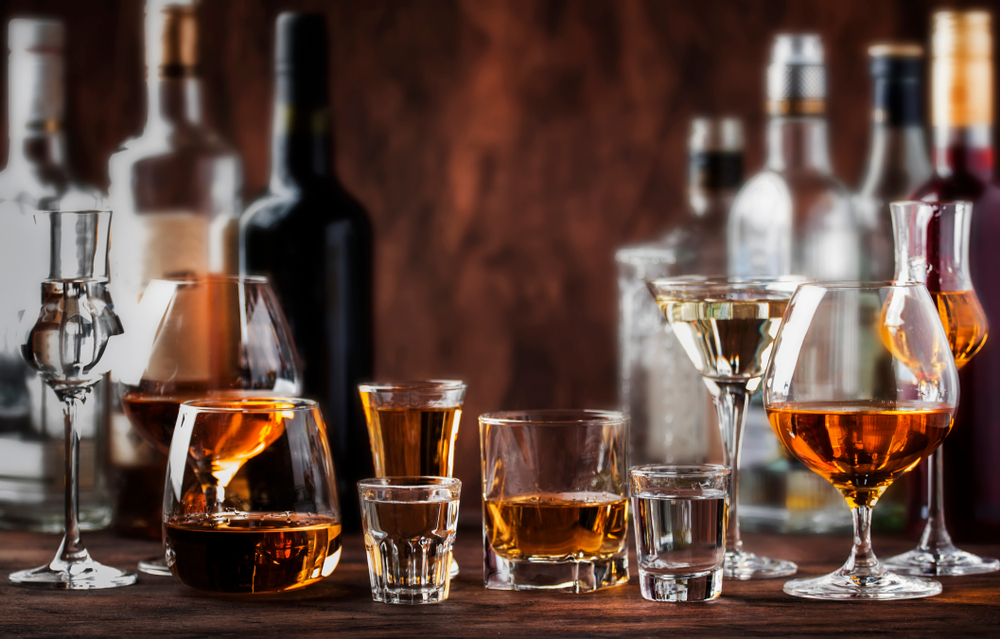
While wine must be made from grapes, spirits can be made from a number of different ingredients, from potatoes to agave. Spirits are, by definition, distilled beverages, meaning the alcohol has been separated from a solution by a process of boiling and condensation. This makes the alcohol more concentrated in flavour and strength than non-distilled products, like beer, cider and wine. Often, spirits are made by distilling already-fermented products: for instance, brandy is made by distilling wine, which is itself made by fermenting grapes. Some liquors, like vodka, can be made from a number of ingredients, like potatoes, maple sap or cereal grains, while others, like gin, require the specific usage of one specific product, like juniper berries. Unlike wine, flavours in spirits are directly added to the mixture, making them slightly more versatile when it comes to experimentation and innovation. For more insight, take a peek at all our alcohol buying guides online here.
How to truly appreciate your spirits
Like wine, liquor classification depends on location, age, brand, ingredients and production technique. Local geographical elements will imbue their properties onto the spirit; for instance, the clear, crisp waters of the Ojira and Jingu rivers are a central feature of Japanese whiskies like Hakushu. The age of certain alcohols, like whisky and Scotch, also changes the flavour profile, with older varieties typically regarded with more esteem. You may read our whisky buying guide if you’re interested to learn more. Some brands have been holding onto the same traditions for several hundred years, like cointreau in France and Lucas Bols in the Netherlands. Others, like Never Never Distilling Co in Australia, were founded as recently as 2016, giving them a modern take on ancient practices.
Explore all sorts of spirits in Singapore
Can’t decide between wine and spirits? Get the best of both worlds with a bottle of cognac, like the Martell XO Limited Edition 40%. Cognac, a variety of brandy, is distilled wine, meaning you get to enjoy grapey, wine-based flavours which have been through the distillation process. Martell is internationally-renowned for high-quality and finesse, and its XO series constitutes some of the best cognac on the market.
Branch out into the world of Scotch, with a bottle of Glen Grant 12 year old single malt. Rich and supple, this scotch contains hints of vanilla, almonds and clove, which interplay in a spicy, hearty overall profile and serve as a fantastic after-dinner treat. Get your hands on a Johnnie Walker Blue Label Year of the Tiger to celebrate Chinese New Year in style. This limited edition Scotch features caramel, hazelnuts and dark chocolate, which are underpinned by a warm, smoky flavour to tie it all together.
Japanese whisky fans will enjoy a bottle of Helios Kura Reki blended whisky, which innovatively merges tropical fruit top notes with sweet caramel on the palate. While you drink, see if you can identify the bottle’s finish notes of toffee and seaweed. Classic whisky lovers might opt for a bottle of Nikka From the Barrel, which interplays apricot, lilac and leather notes with pepper, oak, peaches and honeysuckle, giving it a complex overall profile. Meanwhile, Irish whisky lovers might like to dabble in a tasting of Baileys Irish Cream whisky, enjoying the full, dessert-like qualities of this iconic beverage.
Patron Tequila is a great place to start when trying tequila for the first time. The brand has a lot to offer at different age points, from the young Patron Reposado Tequila to the older, mature, vintage bottles like the Anejo Tequila. Both enjoy a gentle amber colour and the unique taste of agave mixed with oak. The reposado features additional notes of citrus, honey and vanilla, while the anejo enjoys raisins, vanilla and a smokier overall palate.
Start sipping today with iShopChangi!
Now you’re an expert on all things wine and spirits, buy beverages from your favourite brands online here on iShopChangi! Shop for vodka, rum, tequila, amarula, scotch, whisky, baijiu, red wine, white wine and more at duty-free prices, and have your alcohol delivered to addresses in Singapore for free when you spend S$59 or more at the checkout.
YOU MAY ALSO LIKE